
Informational content only. Not financial, legal, or tax advice.
What Is a Credit Report? A Beginner’s Guide
A credit report is a record of credit-related accounts and activity that may be used by lenders, landlords, insurers, and other reviewing entities when evaluating certain applications. It typically summarizes account history, payment patterns, balances, and other items reported to credit reporting agencies.
Updated: February 2026 · Category: Financial Education
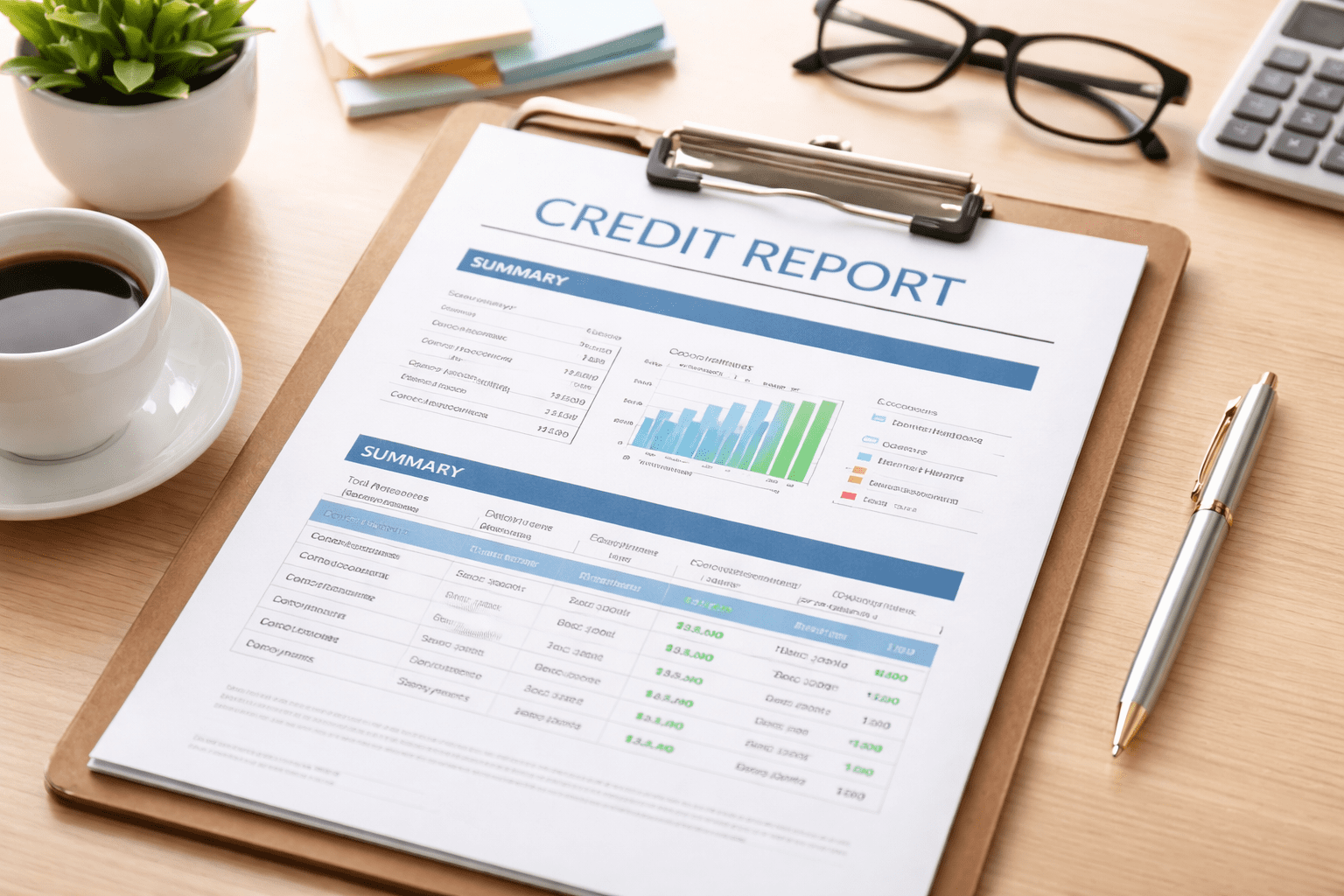
Example layout of a credit report (educational illustration).
Overview · What it includes · Credit bureaus · How it works · How to request a report · Key considerations · Safety notes · FAQ · Related guides
Understanding the Basics
A credit report is a document (or digital file) that summarizes credit-related information reported about an individual. It can include account listings, payment history, balances, and inquiries. Many people think about “credit scores,” but a score is typically a number calculated using information from a credit report.
If you want to understand how scores relate to the report, see: Credit Score Explained: How Credit Scores Work.
Reviewing a credit report can help you understand what information is being reported and whether it appears accurate. If something looks unfamiliar or incorrect, it may be worth reviewing carefully and, if appropriate, using the dispute process offered by the reporting agency.
For broader context on how credit fits into debt planning and repayment decisions, see Debt & Credit Basics.
Common Sections of a Credit Report
Credit reports can vary by bureau and by the source of the report, but many include similar categories of information. Examples may include:
- Personal information: name variations, current and past addresses, and sometimes employers (used for identification, not scoring).
- Account history: credit cards, loans, and other accounts that have been reported (open and sometimes closed accounts).
- Payment history: whether payments were made on time and how delinquencies were reported.
- Balances and limits: current balances, credit limits, and reported past-due amounts (if applicable).
- Inquiries: records of when a report was accessed for certain purposes, such as an application.
- Public records (where applicable): certain legal filings may appear depending on reporting practices and jurisdiction.
Not every report includes every category, and details can differ. Two reports pulled on the same day may look different if they come from different agencies or if creditors report to one bureau but not another.
Who Compiles Credit Reports?
In the United States, the three major nationwide credit reporting agencies are Equifax, Experian, and TransUnion. Each agency may maintain its own version of your file based on the information it receives from reporting creditors.
Because reporting is not always identical across agencies, information can vary slightly between bureaus. If you are reviewing credit for a major decision (such as a rental or loan application), it can be helpful to understand which bureau and which scoring model is being used.
How Credit Reporting Typically Works
Creditors and lenders may report account information to one or more credit reporting agencies. Reported information can include account type, balance, payment status, and whether payments were made on time.
When you apply for credit, a lender may review your report as part of evaluating the application. This type of review is often described as a “hard inquiry.” In contrast, checking your own report or certain prequalification checks may be treated as “soft inquiries,” which generally do not impact scoring models in the same way.
Credit reports update over time as new information is reported. Balances may change as payments post, accounts may be opened or closed, and delinquencies may be added if payments are missed. Timing can vary based on when creditors report and when agencies process updates.
In the United States, credit reporting practices are governed in part by the Fair Credit Reporting Act (FCRA), which outlines consumer rights related to access, accuracy, and dispute procedures.
If you believe something on your report is inaccurate, credit reporting agencies typically provide a dispute process. The agency may investigate and verify the information with the reporting creditor before updating the report.
How to Request and Review a Credit Report
Many people review their credit reports periodically, especially before applying for a major loan or when trying to correct potential errors. When requesting a report, confirm that you are using an official and secure source before entering personal information.
When you receive a report, consider checking: name/address accuracy, unfamiliar accounts, incorrect balances or limits, incorrect late payments, and inquiries you do not recognize. If something appears incorrect, save a copy of the report for your records and review the dispute options provided by the reporting agency.
If you are organizing your finances and prioritizing payments, you may also find it helpful to review a neutral overview of how repayment approaches are structured in practice: Repayment Strategies.
Key Considerations to Keep in Mind
- Credit reports and credit scores are not the same: the report contains the data; a score is typically calculated from it.
- Reports can vary by bureau: your Equifax, Experian, and TransUnion files may not be identical.
- Errors can happen: incorrect balances, unfamiliar accounts, or outdated entries may appear and may require follow-up.
- Timing matters: updates depend on creditor reporting schedules and processing time.
Monitoring a credit report does not guarantee approval for future credit. However, it can help you understand what is being reported and spot issues early.
Safety & Verification Notes
Be cautious of services that promise to instantly remove accurate negative information from a credit report. Legitimate reporting systems typically follow established guidelines, and accurate information generally cannot be removed simply upon request.
When requesting a credit report, confirm that the website address is correct and secure (look for “https” and the official domain). Be cautious of advertisements or third-party websites that closely mimic official reporting agencies.
If you are exploring debt relief or repayment programs related to credit challenges, verify provider credentials and review warning signs. See Debt Relief Red Flags for common scam indicators.
Frequently Asked Questions
Does checking my own credit report affect my score?
In many cases, checking your own report is treated as a soft inquiry and does not impact scoring models. However, policies may vary by provider.
How often should I review my credit report?
Some people review reports annually or before applying for a major loan. Frequency depends on personal circumstances and risk tolerance.
Is a credit report the same as a credit score?
No. A credit report contains account history and reported data. A credit score is typically calculated using information from the report.
Does Resource Wayfinder provide credit repair or financial services?
No. Resource Wayfinder provides educational information only and does not provide financial, legal, or credit services.
Quick Summary
- This guide explains a core financial concept designed to help readers better understand how credit, debt, or assistance programs work.
- Financial decisions often depend on individual circumstances and policies from lenders or program administrators.
- Review official resources and consumer protection agencies for the most current information.
Explore the Full Credit Education Hub
This article is part of Resource Wayfinder’s educational series explaining how credit reports, credit scores, and consumer credit systems work.
For a broader overview of these topics, visit our guide: Debt & Credit Basics.
Sources & Official Information
This article references publicly available consumer education materials and official resources from financial regulators, consumer protection agencies, and major credit reporting organizations.